Tier 2 Chemical List . Following the alphabetical list, the epcra section 313 chemicals are. Of these chemicals, the aspects that should be listed in a tier ii report are listed below: CUSTOM HAULERS CALL (800) 2146905.coast to coast ,,the family handyman from www.cowboycadillac.com The formulated product has a danger signal word on the label because of high acute toxicity, is listed by us epa as a restricted use product (rup), and/or is highly toxic to fish or other aquatic life, birds, wildlife, or honey bees. The purpose of this form is to provide state, local officials, and the public with specific information on potential hazards. Chemicals reportable under the epcra section 312 tier ii requirements include any substance for which a facility must maintain a material safety data sheet (msds) or safety data sheet (sds) under the osha hazard communication standard (29 cfr 1910).
Water Reactive Chemicals List. In contact with water releases flammable gases. For the purposes of this sop, reactive chemicals are defined are those that may:
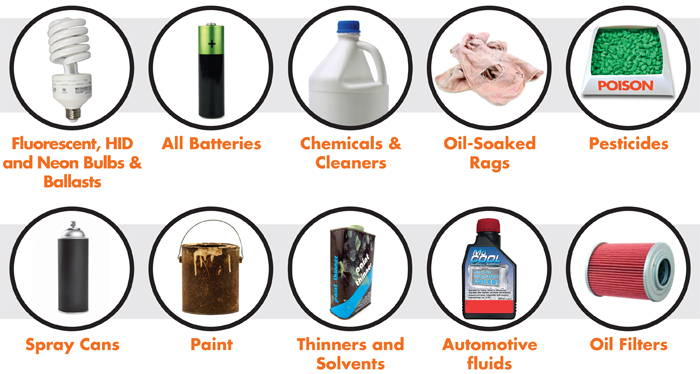
Recycling and Managing Toxic Products for City Departments from www.sfenvironment.org
Because of their reactive nature, it is important to minimize the quantity of reactive chemicals in storage. However, chemicals that ignite after 5 minutes also pose a significant risk to users and should be handled as pyrophoric. (including ghs # h260) lithium;
Examples Of Air Reactive Chemicals Are:
[pg.28] water reactivity can be hazardous by. It is not intended to be a specific procedure for your Water reactive materials chemical class standard operating procedure rev.
Water Reactive Materials Information Water Reactive Materials Are Chemicals That Can React Violently With Water To Produce A Flammable And/Or Toxic Gas And Heat.
Protection process • good laboratory technique However, chemicals that ignite after 5 minutes also pose a significant risk to users and should be handled as pyrophoric. Specific water reactive chemical depend on its reactivity and the nature of the gaseous product (flammable, toxic, or both).
You Can Get All Kinds Of Articles On List Of Water Reactive Chemicals Here.
Pyrophoric substances are liquids, solids, or gases that will ignite spontaneously in air at or below 130 0f (54.4 0c). Silanes, alkyl metal derivatives, fine metal powders, metal hydrides, sodium methoxide, triethylaluminum, and white phosphorous. Keep the material under inert atmosphere (e.g., nitrogen, argon) when not in use.
Reactive Chemicals Are Classified As Explosives, Strong Oxidizing Agents, Water Reactives, Air Reactives, And Special Organic Compounds.
Work away from any water sources or where there is the potential of water splash. Discover things that you didn't know about list of water reactive chemicals on echemi.com. Revision 1/2022 (kb) expand all items.
(Including Ghs # H260) Lithium;
Explosives are substances that can detonate or decompose rapidly and violently at room temperatures and pressure with an essentially instantaneous release of large quantities of gases and heat. Alkali metals (sodium, potassium, lithium), metal hydrides, aluminum alkyls, acid anhydrides, and acid chlorides. 7.15 reactive and potentially explosive chemicals.


Comments
Post a Comment