Tier 2 Chemical List . Following the alphabetical list, the epcra section 313 chemicals are. Of these chemicals, the aspects that should be listed in a tier ii report are listed below: CUSTOM HAULERS CALL (800) 2146905.coast to coast ,,the family handyman from www.cowboycadillac.com The formulated product has a danger signal word on the label because of high acute toxicity, is listed by us epa as a restricted use product (rup), and/or is highly toxic to fish or other aquatic life, birds, wildlife, or honey bees. The purpose of this form is to provide state, local officials, and the public with specific information on potential hazards. Chemicals reportable under the epcra section 312 tier ii requirements include any substance for which a facility must maintain a material safety data sheet (msds) or safety data sheet (sds) under the osha hazard communication standard (29 cfr 1910).
Why Is Reactivity A Chemical Property. Yes, it is a chemical property. The malleability of copper is another reason why it is preferred for the production of.
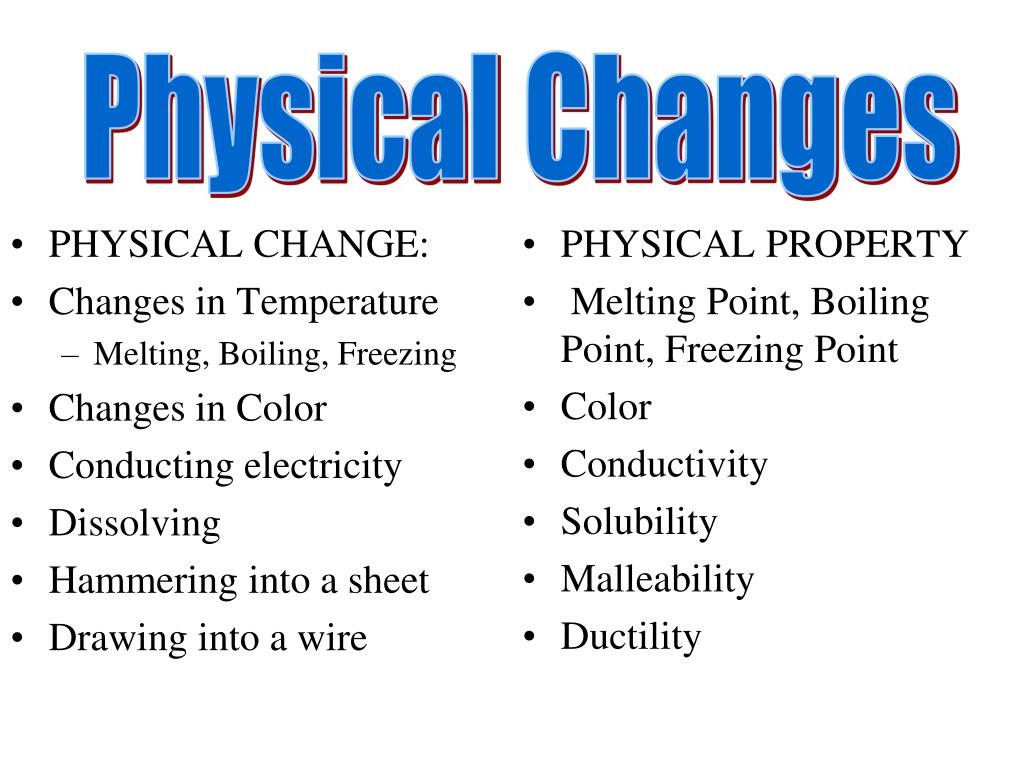
PPT Pure Substances vs. Mixtures Physical and Chemical Changes from www.slideserve.com
Measures to limit exposure and appropriate ppe for the specific chemical product: While a chemical property is revealed only by the behavior of a substance in a chemical reaction, a physical property can be observed and measured without changing the composition of a sample. Condensation is a phase within the water cycle in which the gaseous form of water transitions into the liquid state.
The Products Have Less Stored Chemical Energy Than The Reactants.
The change of one type of matter into another type (or the inability to change) is a chemical property. While chemical stability pertains to a given set of circumstances, reactivity is a measure of how likely a sample is to participate in a chemical reaction under a variety of conditions and how quickly a reaction. In thermodynamics, the chemical potential of a species is the energy that can be absorbed or released due to a change of the particle number of the given species, e.g.
The Water Cycle Is A Process That Shows How Water Moves.
These are useful models for explaining the structure and reactivity of many organic compounds, but modern molecular orbital theory involves the creation of an orbital correlation diagram. A physical change affects only physical properties i.e. Thus, chemical stability fits the definition of a chemical property of matter.
A Physical Change Involves Very Little To No Absorption Of Energy.
Condensation is a phase within the water cycle in which the gaseous form of water transitions into the liquid state. The evaluation guidelines provided in this perspective should enable. The excess energy is generally released to the surroundings when the reaction occurs.
The Following Chemical Properties Are Of Most Concern When Preparing For Possible Chemical Spills:
Descriptions of reactivity, chemical stability and indications of possible hazardous reactions. The malleability of copper is another reason why it is preferred for the production of. Chemical change both physical and chemical properties of the substance including its composition:
When Planning Laboratory Work And Preparing For Potential Problems, Determine The Hazard Class Of All The Chemicals To Be Used.
In a chemical reaction or phase transition.the chemical potential of a species in a mixture is defined as the rate of change of free energy of a thermodynamic system with respect to the change in the number of. Chemical stability is related to chemical reactivity. This property, in combination with its low thermal expansion, makes it highly useful for wiring applications.


Comments
Post a Comment